
French Drain Installation for Soggy Yards and Standing Water
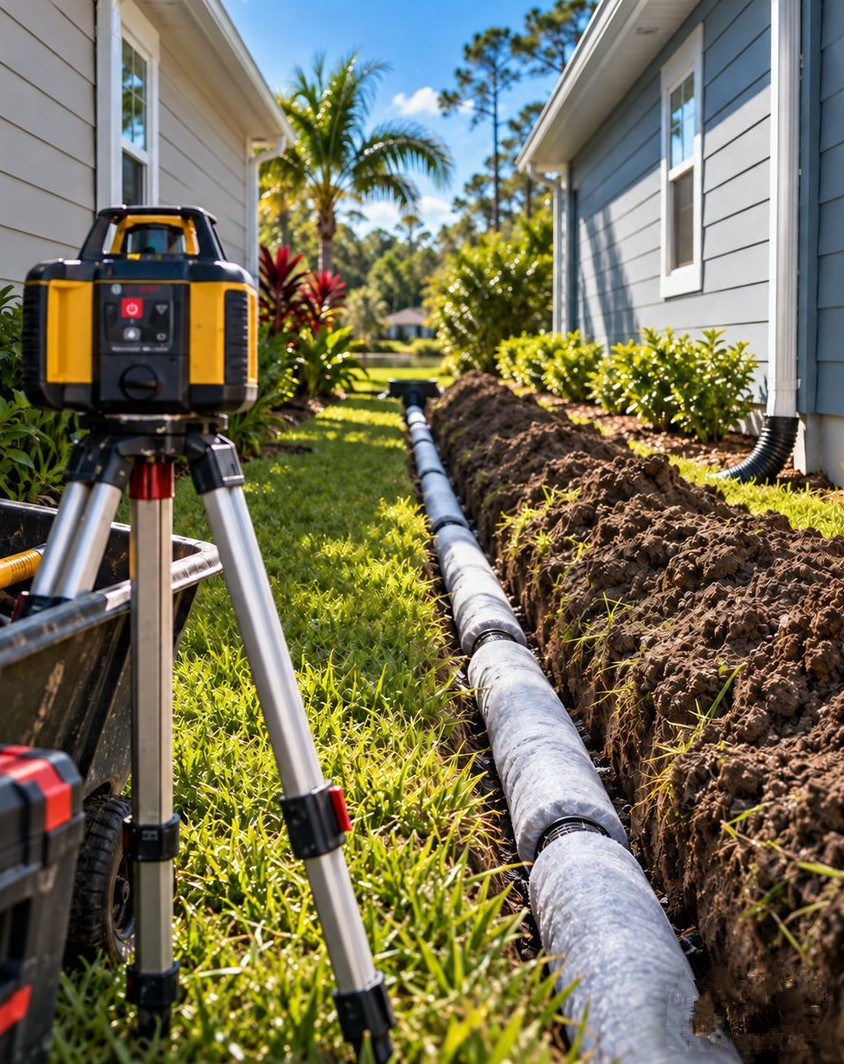
A French drain is a sloped drainage line that collects water from the soil and carries it to a safe discharge point. EVO Professional Irrigation & Outdoor Services installs French drains using the NDS EZflow® Gravel-Free French Drain System: a pre-assembled bundle of slotted corrugated pipe surrounded by lightweight, engineered polystyrene aggregate and enclosed in a geotextile mesh sleeve. We serve homes and businesses across Pinellas, Pasco and Hillsborough County.
French drains manage water; they don’t eliminate it. Heavy rain, hurricanes and other major storms, a high water table and runoff from neighboring properties can still affect any yard, so we explain what to expect before you decide.
Nearly three decades of industry experience.
When a French Drain Helps
Soggy lawn areas
Spongy, wet turf that stays saturated long after rain can often be relieved by a drain that collects and carries water away.
Water along a side yard or foundation edge
Water that collects between homes or along a wall can be intercepted before it pools.
Low spots that hold water
Where grading alone can’t fix a low spot, a drain can give the water somewhere to go.
Wet planting beds
Beds that stay waterlogged can suffer; a drain can lower the moisture around roots.
Water at the base of a slope
Runoff that stops at the bottom of a slope can be collected and redirected.
Combined with other drainage
Site-specific designs may integrate sump pumps, dry wells, catch basins and channel drains, depending on site conditions and allowable discharge methods.
EZflow vs. a Traditional Gravel French Drain
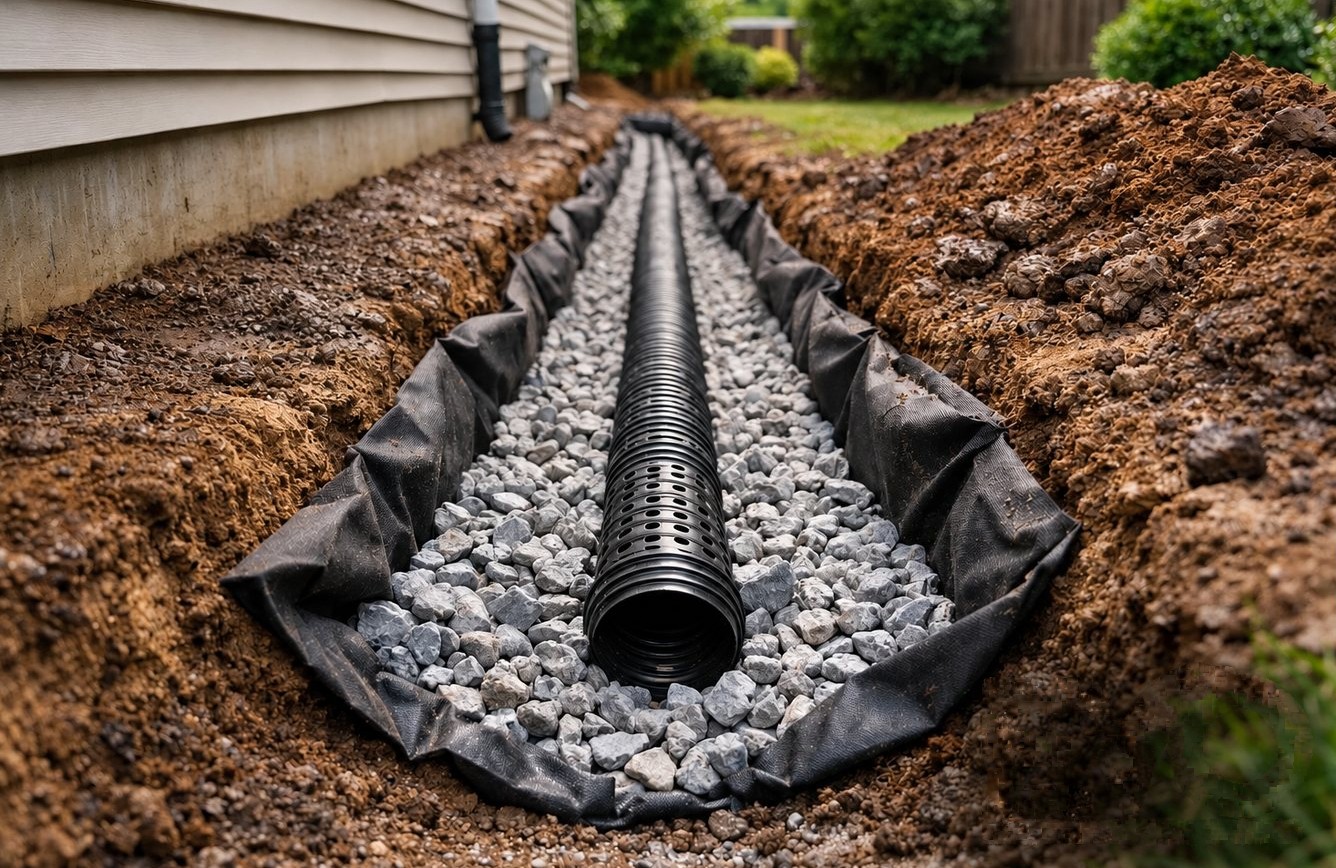
A traditional French drain is a trench lined with filter fabric, filled with gravel and fitted with perforated pipe. An EZflow system replaces the stone with a pre-assembled bundle, so there’s no gravel to haul, spread or backfill around the pipe.
The polystyrene aggregate inside the bundle has engineered flow channels that create open space for water to move and be stored, and the geotextile mesh sleeve helps keep surrounding soil out of the system. Depending on the site, that can offer collection and infiltration advantages over conventional gravel, though results depend on soil, slope and outlet conditions. For manufacturer specifications, see NDS.
Any buried drain, whatever it’s made of, can lose performance over time if soil fines, sediment or debris work their way in. Poor installation or filtering practices can contribute to that, which is why trench preparation, slope, connections and backfill matter.
How We Install a French Drain
Evaluate your yard
We look at where water collects, your grading, and where it can safely go.
Plan the layout and slope
We set the route and the grade so water can flow to the discharge.
Trench and install
We prepare the trench, place the EZflow system, make the appropriate connections and backfill according to the manufacturer’s installation specifications. The installed pipe slope is documented before backfilling.
Finish and test
We complete the installation, check the flow and walk you through how the system works.
Slope documentation. Before backfilling, we verify and document the installed drainage pipe slope using appropriate measuring equipment. Photos or video of the measurements help document the installed grade as part of our installation process.
A recorded slope measurement documents how the pipe was installed. It doesn’t guarantee how a drainage system will perform under every rainfall or groundwater condition.
What Affects the Price
Every property is different, so pricing is flat-rate for the scope we agree on. These are the things that move the number:
- The length and depth of the drain
- Access and obstacles such as trees, fences, pavers and utilities
- Where the water will discharge: daylight, a catch basin, a dry well or a pump-assisted system
- Whether sump pumps, dry wells or other components are needed
- Soil conditions and what we find once we start digging
- Restoration of turf, pavers or hardscape, which is priced separately unless included in your proposal
Good to Know Before You Decide
A French drain needs a proper outlet; water can’t simply be sent onto a neighbor’s property. HOA and local requirements are the property owner’s responsibility, and permit fees are identified in your proposal when they apply. Engineering, surveying and geotechnical work are not included unless separately arranged. Already have a drain that isn’t working? See yard drainage repair. To keep drains working, see our drainage membership plans.
Why EVO Professional Irrigation & Outdoor Services
Nearly three decades of industry experience
Founded on nearly three decades of hands-on industry experience, and licensed (License # CFC1434863).
Flat-rate pricing
You see and approve the price before work begins.
Documented work
You get a service report so you know what we found and what we did.
Frequently Asked Questions
What is a French drain?
A French drain is a sloped drainage line that collects water from the soil and carries it to a safe discharge point. Traditional versions use perforated pipe in a gravel-filled trench; EVO installs the NDS EZflow® Gravel-Free French Drain System instead.
When is a French drain the right solution?
French drains often help with soggy areas, water collecting along a side yard or foundation edge, and low spots where surface water soaks in. We evaluate your yard first to see whether it’s the best fit.
Will a French drain stop all standing water?
No. Drainage manages and redirects water; heavy rain, a high water table and runoff from neighboring properties can still affect a yard. We explain what to expect before you decide.
Where does the water go?
A French drain has to discharge somewhere appropriate, such as a daylight outlet, a catch basin, a dry well or a pump-assisted system. We plan the discharge during your evaluation.
Does EVO install traditional gravel French drains?
EVO’s French drain installations use the NDS EZflow® gravel-free system rather than a traditional gravel-filled trench.
Can a French drain include a sump pump or dry well?
Site-specific designs may combine a French drain with sump pumps, dry wells, catch basins or channel drains, depending on site conditions and allowable discharge methods.
How is a French drain priced?
Scope and price are developed through an assessment and quoting process. Cost depends mainly on length, depth, access and discharge, and you review a descriptive, line-item flat-rate quote before authorizing the work.