
Drainage
Drainage Solutions for Wet, Soggy Yards
Standing water can damage turf, undermine landscape beds, and keep you off your own lawn. EVO Professional Irrigation & Outdoor Services designs and installs drainage that collects water and moves it where it should go—away from patios, walkways and planting areas.
Drainage work is about managing water, not eliminating it. Heavy rain, hurricanes and other major storms, a high water table or runoff from neighboring properties can still affect any yard, so we explain what your solution can and can’t do before you decide.
Nearly three decades of industry experience.
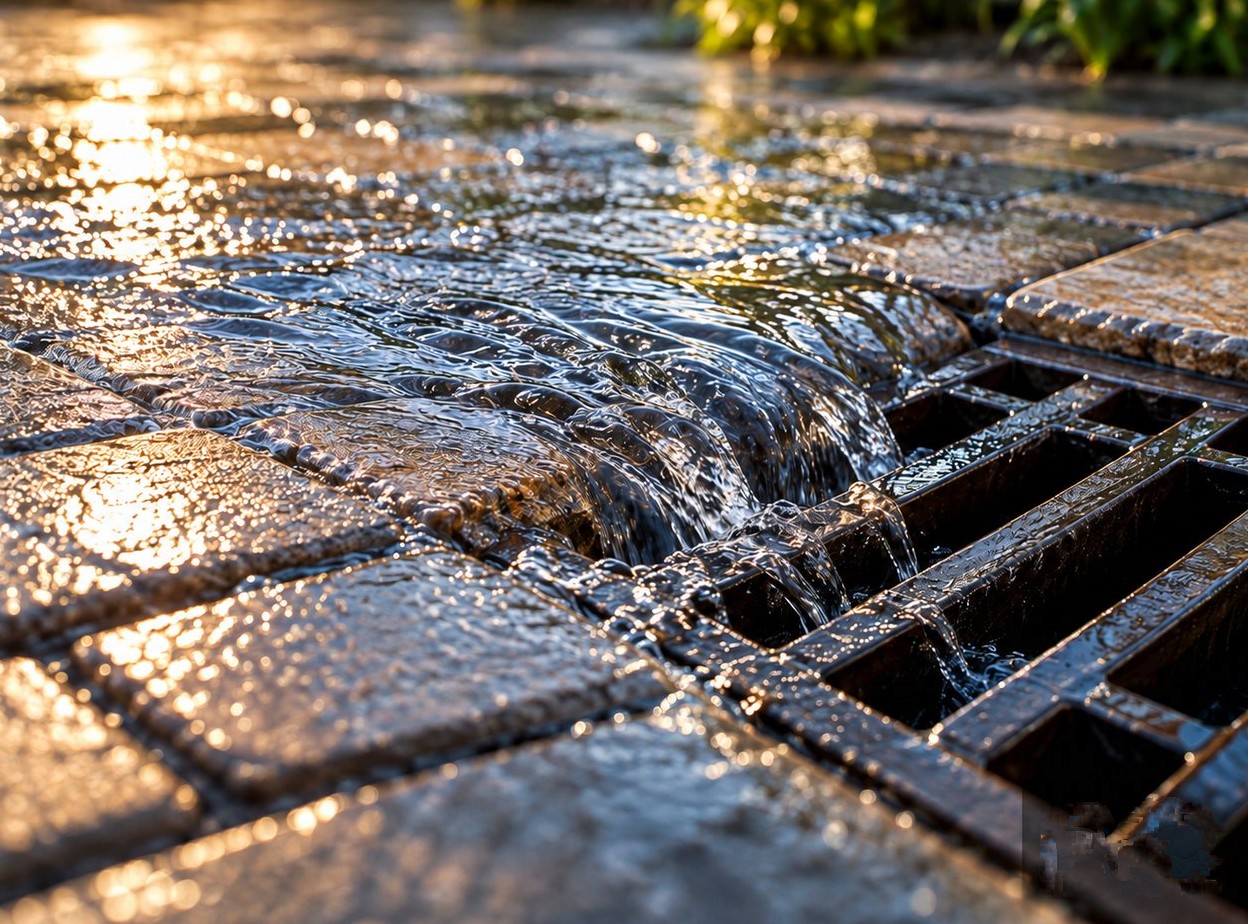
Drainage Installation, Repair, Service & Maintenance
From new drainage system installations to repairs, cleaning, troubleshooting, and ongoing maintenance, EVO provides comprehensive drainage solutions. We address standing water, poor drainage, erosion, and runoff with professionally designed solutions tailored to your property’s needs.
Why Drainage Matters
Water that stays on a property for an extended period can cause more than a muddy lawn. Depending on the site, it can contribute to:
- Mosquitoes and other insects
- Persistently soggy ground and lost turf
- Erosion of soil, mulch and planting beds
- Possible foundation-related concerns when water collects against a structure
- Slippery or unusable walkways, patios and play areas
Not Every Puddle Is a Problem
Brief pooling right after a heavy downpour isn’t necessarily a drainage defect, and not every wet spot will harm a foundation. What matters is how long water stays, where it collects and which way it moves. We help you tell the difference before recommending any work.
Common Drainage Problems
- Water that remains for an extended period after rain
- Soggy, spongy lawn
- Water pooling against patios or walkways
- Washed-out mulch and eroded beds
- Low spots in the yard
- Clogged or undersized existing drains
- Drainage swales between neighboring homes
Swales, especially in newer developments, are often designed conveyance areas that carry water between properties. They should be evaluated before anyone fills, regrades or builds over them.
We use proper grade and slope so the water you collect actually goes somewhere.
What We Install and Service
Channel Drains
Surface drains that capture sheet flow along patios, driveways and walkways.
Catch Basins & Inlets
Collection points that carry low-spot water into a drainage line.
Pump-Assisted Drainage
Sump basins and sump pumps where gravity alone can’t move the water, and where the discharge arrangement is allowed.
Dry Wells & Infiltration
Dry wells and other infiltration components that disperse water into the soil where site conditions and allowable discharge methods support them.
Maintenance & Cleaning
Debris removal, line flushing and pump testing to keep drains working.
French Drains (NDS EZflow®)
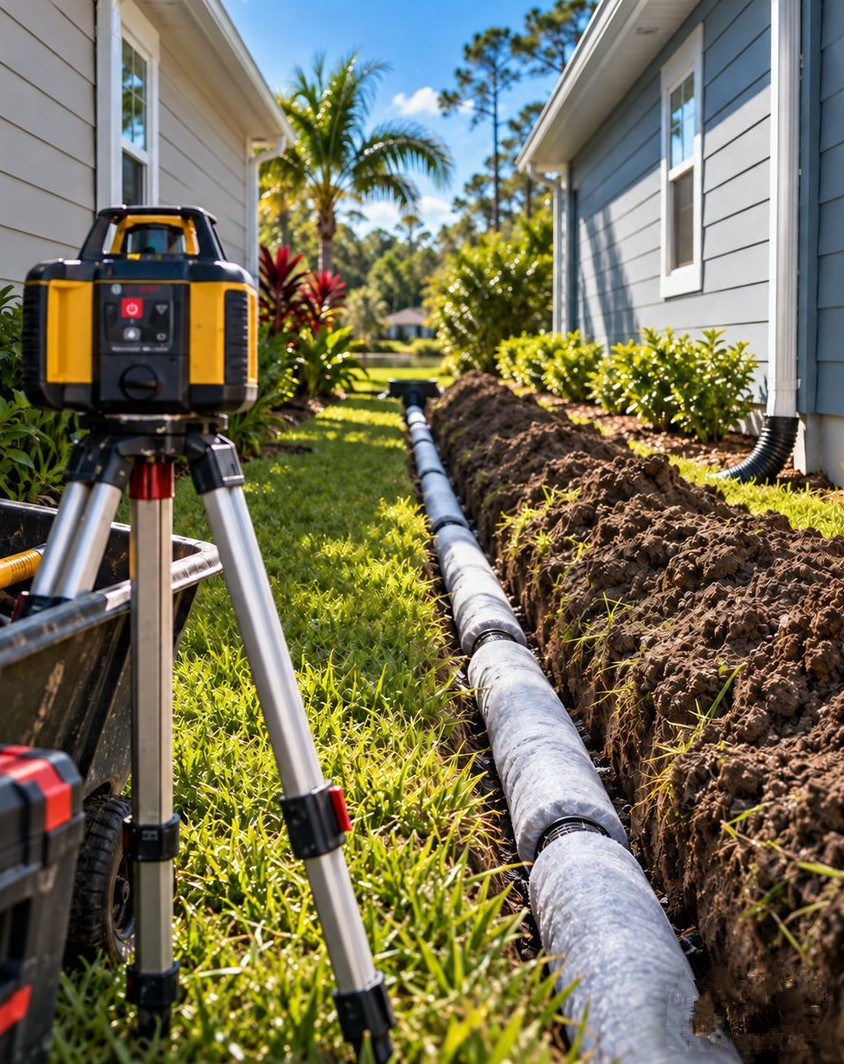
Sloped, gravel-free French drains built with the NDS EZflow® system to collect water from soggy areas and carry it to an appropriate outlet.
Learn MoreFrench Drains with NDS EZflow®
EVO installs French drains with the NDS EZflow® Gravel-Free French Drain System: a pre-assembled bundle of slotted corrugated pipe surrounded by lightweight, engineered polystyrene aggregate and enclosed in a geotextile mesh sleeve. Instead of a trench filled with stone, the bundle goes into the prepared, sloped trench ready to connect.
The aggregate in an EZflow bundle is engineered with flow channels that create open space for water to move and be stored, and the mesh sleeve helps keep surrounding soil out of the system. Compared with a conventional gravel-and-pipe French drain, that design can offer collection and infiltration advantages, though results always depend on the site.
Any buried drain can lose performance over time if soil fines, sediment or debris work their way in, and poor installation or filtering practices make that more likely. That’s why trench preparation, slope, connections and backfill matter as much as the product itself.
Depending on site conditions and allowable discharge methods, a French drain may be combined with sump pumps, dry wells, catch basins or channel drains. Learn more about French drain installation.
Why Drainage Needs Maintenance
Basins, grates, channel drains and inlets collect leaves, sediment and debris. Sump pumps need to be tested before the rainy season. Our drainage membership plans bring a June–July maintenance visit (and a November–December visit on Platinum), plus priority scheduling and discounts on eligible service.
Explore Membership PlansWhat to Expect
- An honest explanation of what’s causing the problem
- A flat-rate price you approve first
- A clear scope, including what isn’t included
- Engineering, surveying and geotechnical work only when separately arranged
How Drainage Service Works
Request an evaluation
Tell us where water collects and when. If you can, share photos or videos taken during and after rainfall: they help us see how much water collects, how long it stays and which way it moves.
Site assessment
We look at grading, discharge points and existing drains.
Flat-rate proposal
You see the scope and price before we start.
Installation or repair
We complete the work and walk you through it.
Frequently Asked Questions
Is a little pooling after a heavy rain normal?
Yes. Brief pooling right after a downpour isn’t necessarily a drainage defect. Water that remains for an extended period, or keeps returning, is worth evaluating.
Should I fill in the swale between my house and my neighbor’s?
Please don’t before having it evaluated. Swales are often designed to carry water between properties, and altering one can send water somewhere it shouldn’t go.
Can you guarantee my yard will stay dry?
No. Drainage manages and redirects water, but heavy rain, groundwater and runoff from other properties can still affect a yard. We explain what a solution can and can’t do first.
What causes standing water in a yard?
Common causes include low spots, poor grading, compacted or clay-heavy soil, clogged or undersized drains and runoff from roofs or neighboring properties.
Do drains need maintenance?
Yes. Basins, grates and inlets collect debris, and sump pumps should be tested before the rainy season. See our drainage membership plans.
Is engineering included?
Engineering, surveying and geotechnical work are not included unless separately arranged.